
Julia Bogusz; Mercè Fernández
LET’S GET STARTED
Hi there, lovers of the environment and culture! Buckle up, because we are about to set off on a fun ride through the dynamic domain of regional cultural events that go beyond ordinary happenings—they embody sustainability’s superheroes!
Imagine a society in which cultural gatherings serve as catalysts for constructive change rather than as occasions for celebration. Guess what, though? Not only is it idealistic thinking, but it’s also the driving force for our blog, „Exploring Local Cultural Events That Make a Difference.“
„Why focus on local events?“ may be on your mind at this point. Well, my dear reader, the place itself is the charm! You see, a lot of the time, the success or failure of an event is determined by its location.
So, get ready to zoom in on the events we’ve attended ourselves or heard stories about from our adventure-seeking friends.
But wait, there’s more! These cultural shindigs aren’t just about fun and games (though there’s plenty of that). They’re about making the world a better place. Imagine a planet where we all gather, not just to revolutionize the beats and flavors of our community but also to learn, grow, and champion the cause of sustainability.
Picture this: a salsa night where you not only learn to dance but also discover theenvironmental benefits of salsa farming (just kidding, but wouldn’t that be something?). These events aren’t just about good vibes; they’re about cultivating a sense of community that’s not only great for our mental health but also for Mother Earth.
So, why should you care about local cultural events that scream sustainability? Because, my friend, they’re the catalysts for a world where education meets celebration. Engaging in these activities isn’t just about feeling the rhythm; it’s about understanding the importance of sustainability, one dance move at a time.
Lüneburg Wochenmarkt
It’s critical to understand that innovative ideas and cutting-edge concepts don’t have to be the only sources of sustainable development in our pursuit of sustainability. The best routes to sustainability may be ingrained in our cultural customs. What could be more successful than environmental initiatives nourished by our rich cultural heritage? The traditions and ways of our ancestors may teach us a lot about sustainable living. Thus, it should come as no surprise that indigenous customs that have endured through the ages serve as both a testament to human perseverance and a symbol of the significance of the earth’s ecology. Farmers‘ markets are a time-honored tradition that demonstrates how cultural norms can work as potent accelerators for sustainable living. With roots dating back centuries, these markets continue to thrive in many countries in the face of globalization. What makes them up to par with the competition in the global market? On the surface, we see products competing with varying qualities and characteristics. But there’s perhaps a deeper explanation for customers to continue to support this long-held event.
Let’s turn our attention to one local example here in Lüneburg—the Lüneburg Wochenmarkt—to explore just how powerful culture, stories, and place can sustain and promote several Sustainable Development Goals (SDGs). We are now at the heart of Lüneburg, where the shadows from the morning sun behind the fairytale-like red buildings are still stretched long, and the rush of delivery trucks is passing through town to stock up on local shops. In front of the town hall in particular, several vendors are preparing their stalls with everything from fresh fruits and vegetables to handmade candles. 2 While it isn’t a daily occurrence, it just so happens to be a Wednesday or Saturday, and neighbors are coming to town to get their share from this farmers market. While for some it is a day to restock on groceries, for others it is an outing for the family.
The „Wochenmarkt,“ German for „weekly market,“ has been ingrained in the town’s identity since the Middle Ages. Much like their ancestors, people today come to get their local produce almost year-round. They only close the traditional Christmas markets for two months at the end of the year. Beyond economic transactions, farmers‘ markets like these stand as a testament to the resilience of cultural traditions, showing local values and customs and giving a sense of community, place, and identity. It’s no wonder it has served as a glimpse for foreigners to look into the local culture. Therefore it can be surprising to learn that such an old lasting tradition holds a story beyond community resilience, and is the living embodiment of sustainable cultural practices. We look to the Sustainable Development Goals and find many elements that align with the Lüneburg Wochenmarkt. One which vividly portrays the principles of SDG 8, where the support for local farmers and vendors becomes a driver for local economic growth.
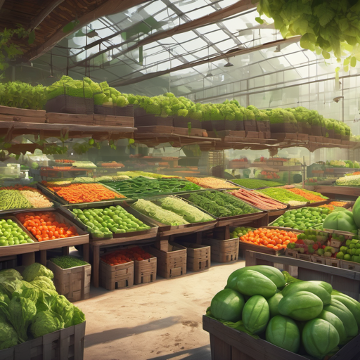
As this event becomes a gathering for the local community, relationships are formed that surpass the strategies of the global distributors. With that close connection to your friendly regional bakery, or locally sourced strawberry jam, the supermarket seems disengaging and, perhaps, less meaningful. The Wochenmarkt in contrast follows a story of time and place, where seasonal fruits and vegetables signify the time of year and the local ecology.
As we leave the scene of the bustling market, we bring home a sense of belonging from the shared experience. The Lüneburg Wochenmarkt transcends being merely a market and is a cultural force that promotes sustainability through responsible practices, education, resilience, and economic growth – a holistic embodiment of a sustainable future. At the end of the day, it is the culture, stories, and places that can unlock more sustainable living.
Lunatic Festival
Have you ever thought, „Could this be greener?“ when attending a festival? Hold on to your green caps, for the Northern German Lunatic Festival has heard you! And what do you know? Its location in this thriving area wasn’t chosen by accident; rather, it’s a deliberate choice that enhances the festival’s eco-friendly vibe.
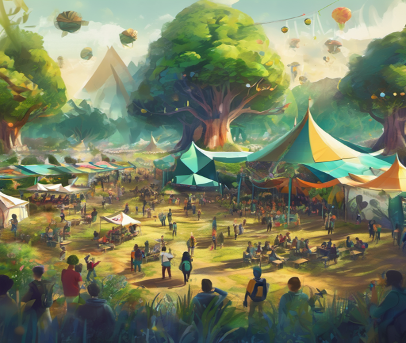
The exciting surprise is that your average event coordinator doesn’t manage Lunatic Festival. Oh no, it is powered by the eager group from Lüneburg’s Leuphana University. These students are on a mission to learn, explore, and infuse sustainable magic into every festival nook and cranny—they aren’t just here for the party. Hey, why end the journey at Lüneburg? Could this model spread its green attractiveness to universities throughout the world?
The idea alone piques our interest and expands our imagination. Imagine if each festival was transformed into a school and each attendee was a sustainability student. Nice, huh?
Now let’s get back to the original reason for the green fiesta: local. Because, let’s face it, there is always room for improvement in every instant when we tap our feet. Lunatic Festival aims to awaken minds and create a community that comes together to dance and learn, not only to amuse. The Lunatic vision is of a world in which every occasion becomes a chance to inspire and teach.
This festival is more than simply an occasion; it’s a window into a time when having fun and having a constructive influence coexist. Consider biodegradable cups, solar-powered stages, and a determined commitment to reducing trash. Every decision you make, such as using local products and reducing trash, results in an environmentally conscious celebration that makes your heart skip a beat. From SDG 12 (Responsible Consumption and Production) with their compostable cups to SDG 13 (Climate Action) rocking those solar-powered stages, Lunatic is a living example of how cultural events can be a powerhouse for sustainability. The festival isn’t just about entertainment; it’s a classroom where every beat and every choice is a lesson in making a positive impact.
The history of Lunatic kicks off in 2003 when some students decided, „Hey, let’s throw a music festival on campus!“ Fast forward to 2004, and boom, the Lunatic Festival made its debut. Since then, it’s been growing like crazy, even selling out in 2014 with 3000 party animals per day. The pandemic hit pause in 2019 and 2020, but 2021 saw Lunatic bouncing back, masks and all.
Now, what makes Lunatic stand out? It’s not just a festival; it’s a learning project for thestudents. Picture this: they apply before winter hits, join a seminar, and for two semesters, they’re deep into organizing this epic fiesta. Thanks to this unique setup, they can score some serious academic credit points – 10 in total. The university and the festival team are like a dynamic duo, working hand in hand to create a wild, unforgettable experience.
What about values? Lunatic isn’t just about music and good times; it’s got a mission. Sustainability is its middle name. From using eco-friendly cups to minimizing that festival-sized carbon footprint, every decision is like a green superhero move. And here’s the lineup – not just the bands, but the teams that make it all happen. The Production & Terrain Design crew is ensuring the festival ground is as cool as the beats.
The Music & Booking squad brings the best tunes, while the Art team adds that creative flair. Then you’ve got the Culture & Mediation folks sparking discussions on society’s hot topics. PR wizards handle the festival’s image, and the finance & catering management team keeps the money matters in check – all while making sure the food and drinks are on point.
Wrapping up!
That concludes our trip via cultural coolness to sustainability! Being green can be a whole lot of fun, as demonstrated by the eco-friendly celebration at the Lunatic Festival and the timeless feelings at Lüneburg Wochenmarkt.
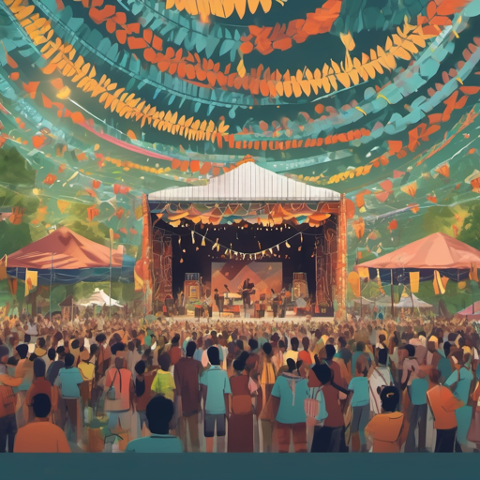
The weekly market in Lüneburg is more than simply a place to buy vegetables; it’s a family get-together that ties us to history, the local community, and positive energy. It’s more than just packing bags full of locally crafted goods; it’s like an all-inclusive, feel-good celebration.
Let’s now discuss the Lunatic Festival, an extraordinary event organized by students in Lüneburg. Imagine yourselves dancing beneath the stars, drinking from biodegradable cups, and having a purposeful party. These students are the sustainability rock stars we were unaware we needed—they’re more than simply event planners.
So let’s toast to the Lüneburg Wochenmarkt, where sustainability and tradition collide, and to the Lunatic Festival, where each beat feels like a giant high five to the environment. Let’s continue to dance, choose environmentally responsible options, and use every cultural event as a platform for fun and a sustainable future. Let’s celebrate the sounds, emotions, and enduring happiness—after all, it’s all about staying cool while cooling the world down.
References
All pictures included are AI-generated*
*AI-powered products and tools within Canva (Magic Studio™), including AI Products.
George, C. (2023). Das sind die Neuen auf dem Lüneburger Wochenmarkt. Hamburger
Abendblatt. Retrieved November 20, 2023, from
https://www.abendblatt.de/region/harburg-landkreis/article239315989/Das-sind-die-Neuen-auf-dem-Luen
eburger-Wochenmarkt.html.
Hansestadt Lüneburg. (2023). Die Zukunft des Lüneburger Wochenmarkts – Stadt startet
Umfrage zu Wünschen und Ideen. Hansestadt Lüneburg. Retrieved November 20, 2023, from
ochenmarkts-stadt-startet-umfrage-zu-wuenschen-und-ideen.html.
Lüneburg Marketing GmbH. (n.d.). Lüneburger Wochenmarkt. Lüneburg Tourismus.
https://www.lueneburg.info/lueneburger-wochenmarkt
Marusak, A., Sadeghiamirshahidi, N., Krejci, C. C., Mittal, A., Beckwith, S., Cantu, J., Morris, M., &
Grimm, J. (2021). Resilient regional food supply chains and rethinking the way forward: Key Takeaways
from the COVID-19 pandemic. Agricultural Systems, 190, 103101.
https://doi.org/10.1016/j.agsy.2021.103101
Sgroi, F. (2023). Sustainability and culinary traditions? Understand the role of historical markets in the
development of agri-food and local gastronomy from the perspective of behavioral economics.
International Journal of Gastronomy and Food Science, 34, 100809.
https://doi.org/10.1016/j.ijgfs.2023.100809
Wikipedia-Autoren. (2008). Lunatic Festival. https://de.wikipedia.org/wiki/Lunatic_Festival
Lunatic e.V. (2023, December 20). lunatic Festival 2024. Lunatic Festival. https://lunatic-festival.de
Lünepedia (2022) Lunatic Festival – Lünepedia. https://www.luenepedia.de/wiki/Lunatic_Festival.